
-
MT
Magnetic Particle Testing (MT)
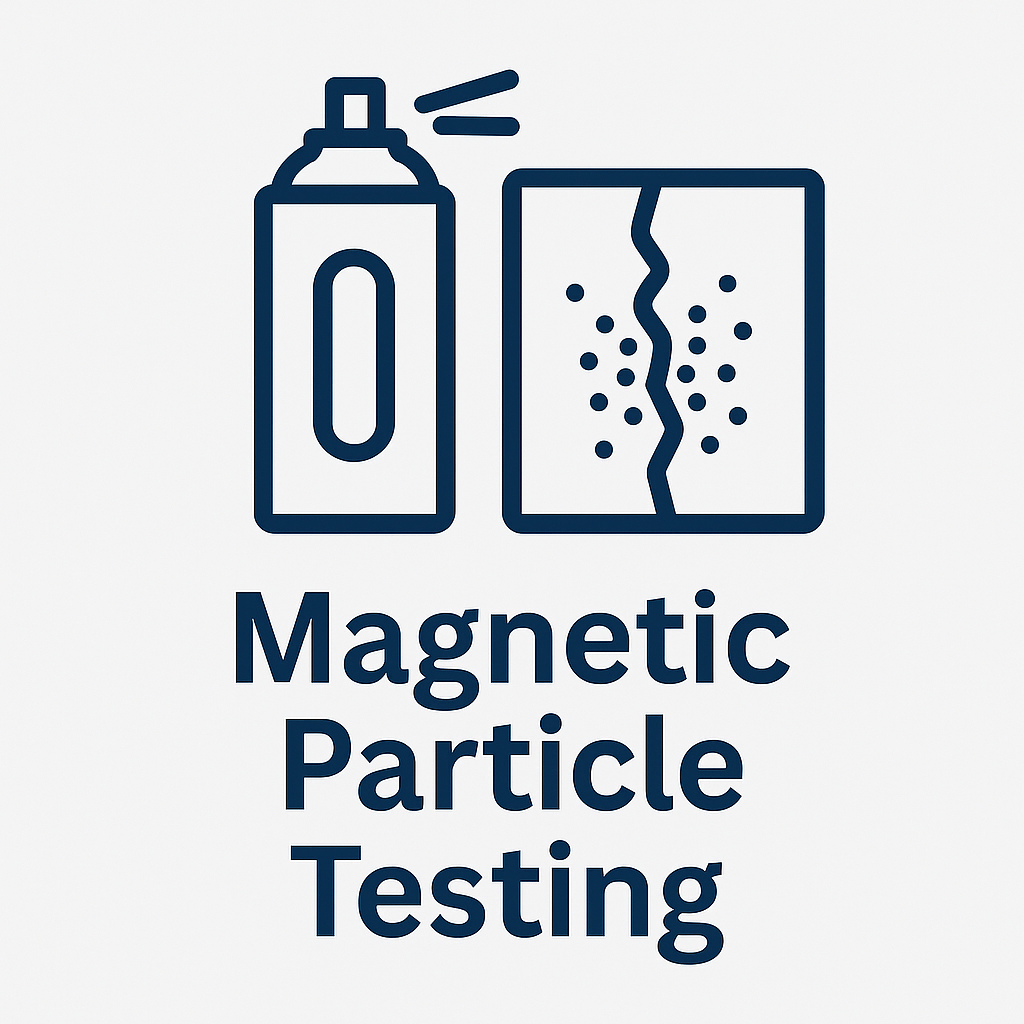
Magnetic Particle Testing is a non-destructive inspection method used to detect surface and slightly subsurface discontinuities such as cracks, seams, or inclusions in ferromagnetic materials. During the test, a magnetic field is applied to the part and fine magnetic particles are introduced; these particles gather at any area of flux leakage, clearly revealing defects.
MT is highly effective for identifying surface-breaking flaws in welds, castings, and machined components, making it a reliable tool for quality control and preventive maintenance. However, it is limited to ferrous materials (steel, iron, etc.) and cannot detect defects that are deep below the surface or in non-magnetic materials such as aluminum or stainless steel.
-
PT
Liquid Penetrant Testing (PT)
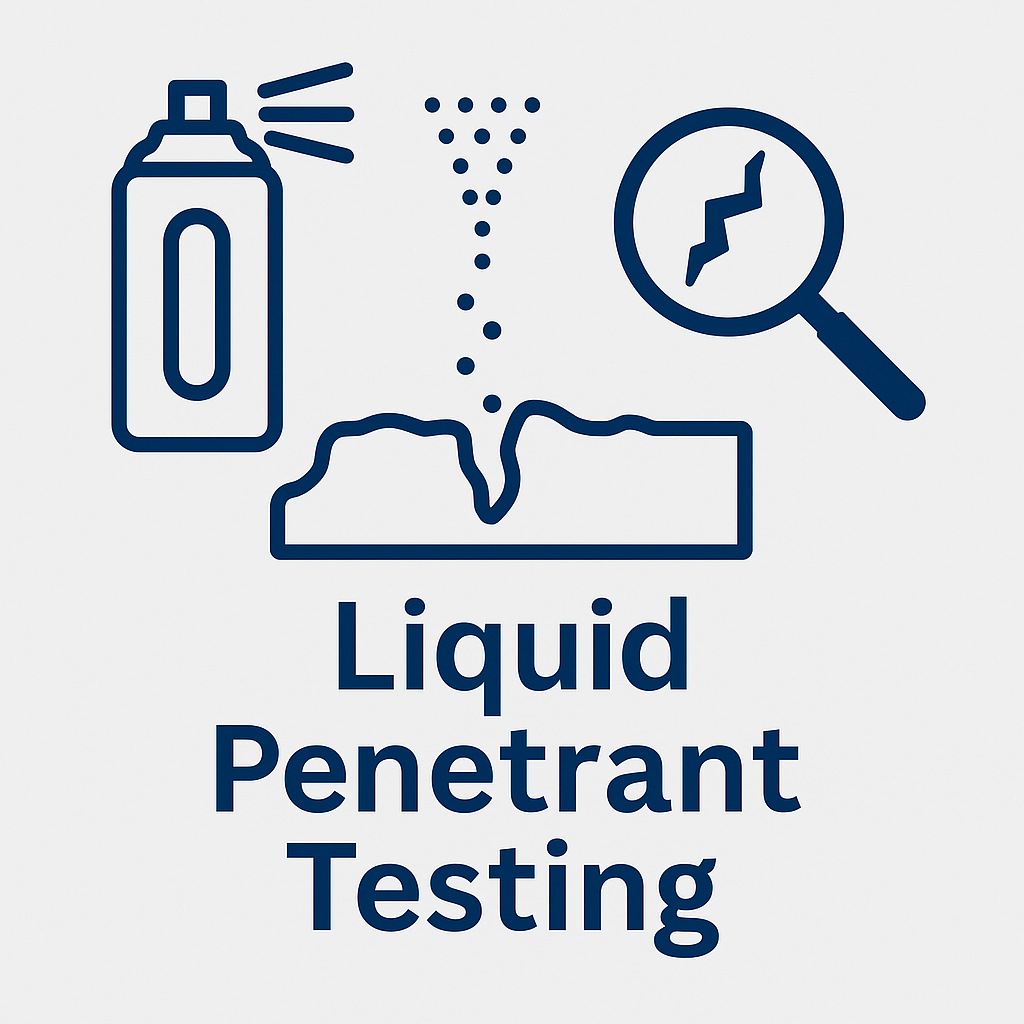
Liquid Penetrant Testing is a versatile non-destructive testing method used to detect surface-breaking flaws such as cracks, porosity, laps, or leaks in both ferrous and non-ferrous materials. A visible or fluorescent dye penetrant is applied to the clean surface of a component, seeping into any surface discontinuities. After the excess penetrant is removed, a developer draws out the trapped liquid, revealing defects clearly under visible or ultraviolet light.
PT is ideal for inspecting welds, castings, forgings, and machined parts where fine surface cracks could affect safety or performance. However, it can only reveal flaws open to the surface and requires thorough cleaning before and after testing. It is not suitable for porous materials or detecting subsurface defects.
-
UT
Ultrasonic Testing (UT)
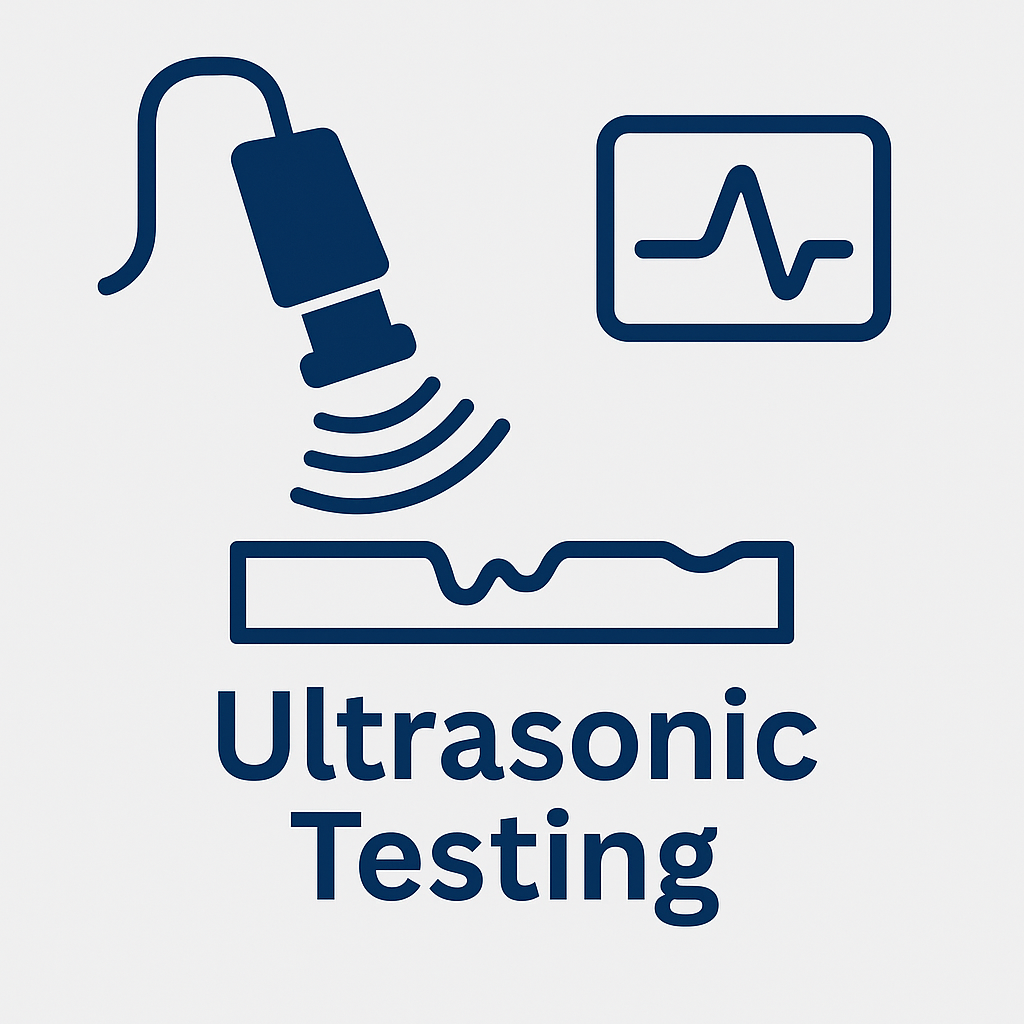
Ultrasonic Testing is an advanced non-destructive inspection method that uses high-frequency sound waves to detect internal and surface-connected flaws in a wide range of materials. A transducer sends ultrasonic pulses into the test piece; when these waves encounter a discontinuity, such as a crack, inclusion, or boundary change, part of the energy is reflected back and displayed as a signal on a screen.
UT provides precise information about flaw location, size, and depth, making it an essential tool for evaluating the integrity of welds, pressure vessels, pipelines, and structural components. It can be applied to both metallic and non-metallic materials and is effective for thickness measurement as well. However, UT requires smooth surfaces and good access for accurate results, and it may not be ideal for rough or complex geometries.
-
VT
Visual Testing (VT)
Visual Testing is the most fundamental non-destructive testing method, used to identify surface imperfections and visible signs of damage or wear on materials, welds, and structures. It involves direct or enhanced visual examination—often using magnifiers, mirrors, cameras, or borescopes—to assess surface condition, alignment, and workmanship.
VT is a cost-effective and efficient way to detect issues such as cracks, corrosion, misalignment, and poor weld profiles before they lead to failures. It is often the first step in any inspection program and forms the foundation for determining whether further testing is required. However, VT is limited to surface-visible defects and depends heavily on lighting and accessibility.
-
UT-RT-MT-PT-VT
Level III NDT Services
N-VUE’s Level III NDT Services provide the highest level of technical expertise and certification support across all major inspection methods. Our Level III professionals ensure your NDT operations meet the intent and requirements of applicable codes, standards, and customer specifications.
These services include procedure review and approval, personnel qualification and certification oversight, technical consultation, and compliance verification. We also support organizations with training, method selection, and interpretation of inspection results to maintain the integrity and consistency of their programs.
By partnering with N-VUE for Level III services, you gain independent, credentialed expertise that enhances the credibility and performance of your inspection program — ensuring quality from the top down.
-

NDT and Quality Program Development
Program Development
N-VUE provides tailored NDT program development services designed to help organizations build effective, compliant inspection systems from the ground up. We assist with procedure creation, method selection, personnel qualification plans, and documentation systems that meet applicable codes and standards.
Our goal is to create programs that are practical, efficient, and audit-ready, ensuring inspections are performed consistently and accurately. Whether you’re starting a new operation or refining existing processes, N-VUE delivers structured solutions that strengthen quality assurance and regulatory compliance.
-
Incident Response
Incident Response
N-VUE provides professional incident response and assessment services to help asset owners and NDT service providers address unexpected issues with clarity and confidence. Whether responding to inspection anomalies, equipment damage, or material integrity concerns, we offer technical guidance, on-site evaluations, and objective assessments to support informed decision-making.
Our approach focuses on identifying root causes, reviewing inspection data, and recommending effective solutions or next steps to maintain safety and compliance. With experience across multiple testing methods and industries, N-VUE serves as a trusted resource during critical situations, helping teams navigate complex challenges efficiently and responsibly.
-
Auditing
Internal & 3rd Party Auditing
N-VUE provides independent auditing services to evaluate the effectiveness and compliance of NDT programs, whether internal or external. Our audits focus on procedure adherence, personnel qualification, documentation accuracy, inspection performance and overall program performance, ensuring operations align with regulatory and industry standards.
By combining technical insight with an objective perspective, we help organizations identify gaps, verify compliance, and strengthen quality systems, giving both management and customers assurance of consistent, reliable inspection practices